- Input: one or more protein or codon-aligned nucleotide sequences, depending on the toolkit.
- Output: sequence embeddings, per-position token probabilities, sampled mutations, or naturalness scores.
Masked Models
Masked Models
Protein language models for embeddings, scoring, and sampling
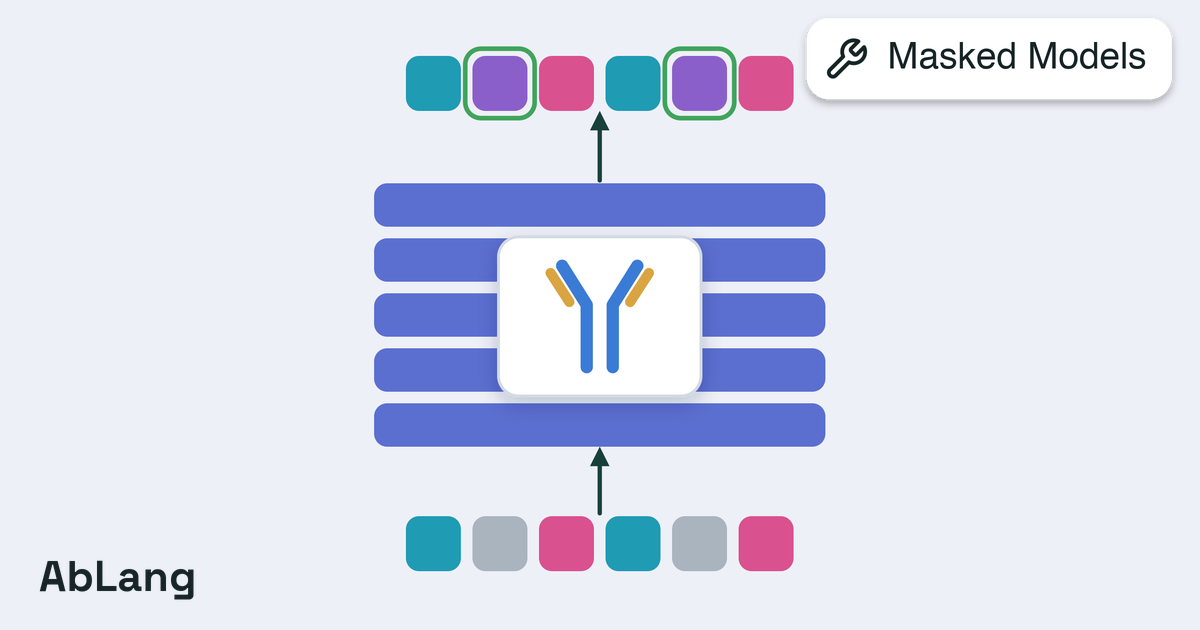
Protein- and coding-sequence language models trained to fill in masked positions using surrounding context from
both directions. They produce sequence embeddings, per-position token probabilities,
sampled mutations, and naturalness scores. These outputs are sequence-level priors, useful
for representation, local editing, and ranking rather than structural or functional
validation.
 OPIG
OPIG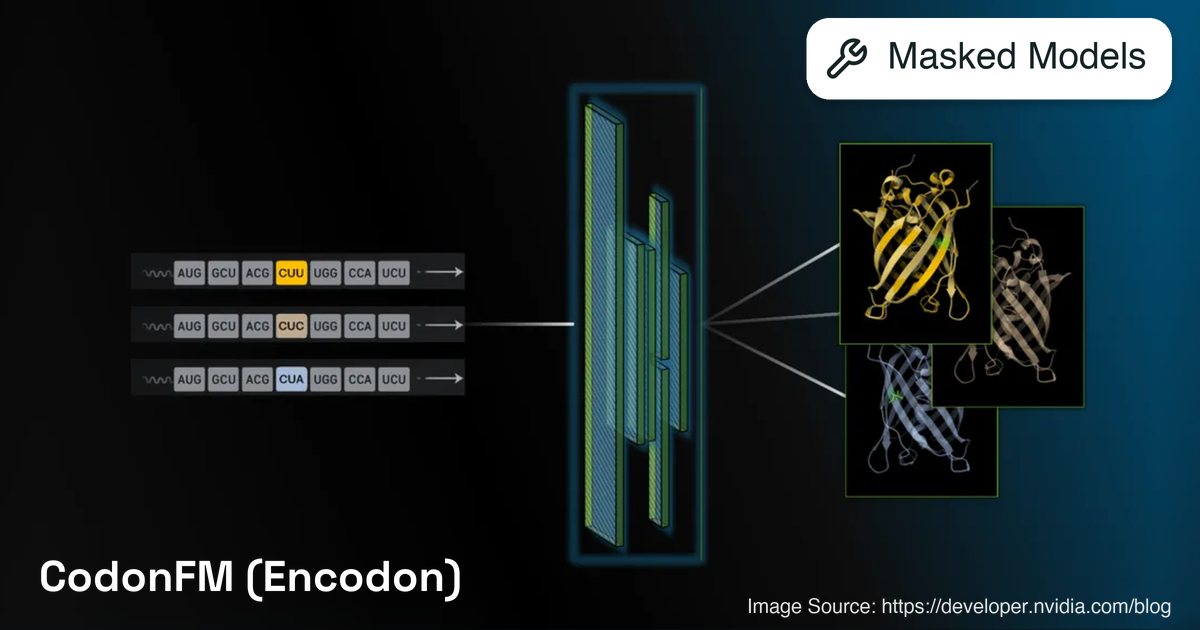
 NVIDIA
 Arc Institute
 UCSF
UCSF
 Meta AI
 Biohub